The 15 Greatest Poker Players of All Time (2026 Rankings)
Phil Ivey, Phil Hellmuth and 13 more legends, ranked by WSOP bracelets, the all-time money list and cash-game reputation — the definitive poker GOAT list for 2026.
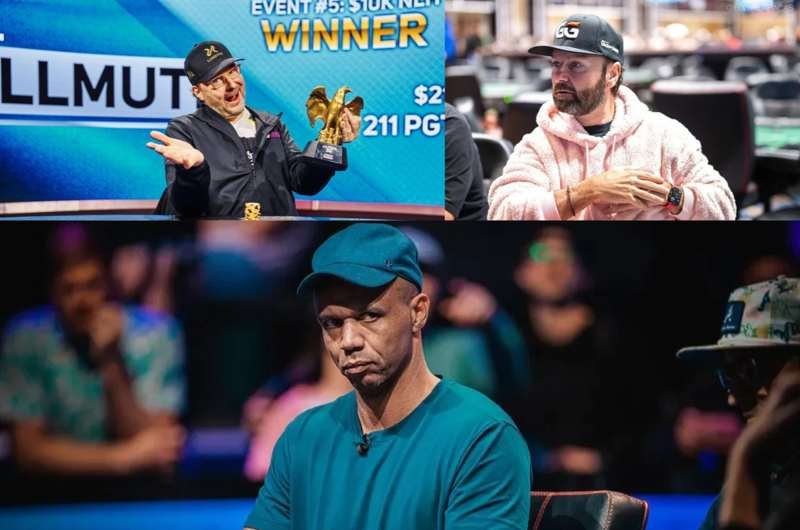
Phil Ivey and Phil Hellmuth top most experts’ shortlists, but poker’s greatest-of-all-time debate spans five decades of WSOP bracelets, all-time money list leaders and cash-game legends who built their reputations away from the cameras entirely. This ranking weighs tournament hardware, tracked earnings, cash-game standing and influence on the game to answer the question as fairly as poker’s messy history allows.
How We Ranked the Greatest Poker Players Ever
There’s no single stat that settles who the best poker player of all time is, so this list weighs four things side by side:
- WSOP bracelets and Main Event titles — poker’s most prestigious hardware, and the clearest historical yardstick since the 1970s.
- The all-time money list — tracked live tournament earnings, which favor the modern high-roller era over the pre-internet legends.
- Cash-game reputation — for players whose real fortunes (and fear factor) were built off camera, at the highest-stakes tables in the world.
- Influence on the game — whether a player changed how poker strategy itself is taught and played, from Doyle Brunson’s Super/System to the solver-driven high-stakes regulars of today.
No ranking of poker’s greatest players will ever be uncontroversial — comparing a 1970s road gambler to a modern online crusher is close to comparing different sports. This list leans on verifiable career numbers rather than gut feeling wherever possible.
The 15 Greatest Poker Players of All Time, Ranked
1. Phil Ivey
Often called the best all-around poker player of all time, Ivey is the rare name equally feared in tournaments and in the highest-stakes cash games in the world. He sits second on the all-time WSOP bracelet list with 11, trailing only Phil Hellmuth, and his 11th came in 2024 after a ten-year bracelet drought — a win that reignited the debate over who really is poker’s GOAT. Unlike most tournament specialists, Ivey has also taken on (and beaten) the world’s best in nosebleed-stakes cash games, the format many pros consider the truest test of skill.
2. Phil Hellmuth
No one has more WSOP hardware than “the Poker Brat.” Hellmuth holds the all-time record with 17 WSOP bracelets, six clear of the next player, and became the youngest WSOP Main Event champion in history when he won in 1989 at age 24. He’s the only player to win a bracelet in five different decades, and he came within one heads-up match of an 18th bracelet at the 2026 WSOP. Critics point to his relatively thin cash-game resume, but as a pure tournament recordholder, Hellmuth’s case for greatest poker player of all time is hard to argue with.
3. Doyle Brunson
“Texas Dolly” is poker’s founding father. Brunson won the WSOP Main Event back-to-back in 1976 and 1977, finished his career with 10 bracelets, and made a WSOP final table at age 84. His 1978 strategy book Super/System is still considered one of the most influential poker books ever written, and an entire generation of professionals learned the game from it. Brunson played professionally for more than 50 years before passing away in 2023.
4. Stu Ungar
The most naturally gifted player poker has ever produced, Ungar won the WSOP Main Event three times (1980, 1981, and 1997) — a feat matched only by Johnny Moss. His comeback title in 1997, won after years lost to addiction, remains one of the most dramatic stories in poker history. Ungar’s career was cut short when he died in 1998 at age 45, and “what could have been” still hangs over every conversation about poker’s greatest talents.
5. Johnny Chan
Chan is the only other player besides Moss and Ungar to win consecutive WSOP Main Events, taking the title in both 1987 and 1988, then falling just short of a third straight win as runner-up to Phil Hellmuth in 1989. That 1988 final hand against Erik Seidel became one of poker’s most famous moments after it was immortalized in the film Rounders. Chan finished his career with 10 WSOP bracelets, tied for third all-time.
6. Johnny Moss
Known as the “Grandfather of Poker,” Moss won the first-ever WSOP Main Event in 1970 (voted on by his peers) and went on to win it two more times, in 1971 and 1974, for three Main Event titles overall. A Texas road gambler for decades before the WSOP existed, Moss finished with 9 WSOP bracelets and remains one of the sport’s foundational figures.
7. Daniel Negreanu
“Kid Poker” is poker’s most recognizable ambassador and one of its most decorated players, with 8 WSOP bracelets won across three decades (1998–2026) and more than $60 million in career tournament earnings. He’s the only player ever to win WSOP bracelets in Las Vegas, Europe, and the Asia-Pacific, and the only two-time winner of WSOP Player of the Year. Negreanu’s mix of hall-of-fame results and mainstream popularity, built through vlogging and commentary, makes him arguably the most influential ambassador the game has had.
8. Erik Seidel
Seidel’s poker story began with a loss — his runner-up finish to Johnny Chan in the 1988 Main Event is the same hand made famous by Rounders. He turned that into one of the most durable careers in poker history, winning 10 WSOP bracelets (tied for third all-time) across four decades and banking more than $46 million in tracked earnings. Seidel is a Poker Hall of Famer known as much for his quiet consistency as for any single result.
9. Bryn Kenney
Kenney tops poker’s all-time money list, the first player in history to pass $80 million in tracked live tournament earnings. His signature score came at the 2019 Triton Million in London, where a heads-up chip deal left him with a $20.56 million payday — one of the largest single tournament cashes ever recorded. Kenney built his fortune almost entirely in the high-roller and super-high-roller circuit that didn’t exist for most of poker’s history.
10. Justin Bonomo
Bonomo held the number-one spot on poker’s all-time money list on and off between 2018 and 2023, becoming the first player ever to cross $60 million in tracked live earnings. His biggest win came in the 2018 WSOP $1,000,000 buy-in Big One for One Drop, worth a $10 million first prize. A former competitive Magic: The Gathering player, Bonomo is one of several online-era crushers who reshaped what “greatest of all time” means in the high-roller age.
11. Chris Moneymaker
Moneymaker’s greatness isn’t measured in bracelets — he has one — but in what his win changed. The amateur accountant qualified for the 2003 WSOP Main Event through a $39 satellite tournament on PokerStars and went on to win the whole thing, sparking the “Moneymaker Effect”: the online poker boom that turned the WSOP Main Event field from hundreds of players into thousands within a few years. No player on this list changed the size and shape of the poker industry more than he did.
12. Tom Dwan
Known by his online handle “durrrr,” Dwan became a legend for his hyper-aggressive style in the highest-stakes cash games ever televised, on shows like High Stakes Poker and Poker After Dark. He’s credited with helping usher in the modern, aggressive, range-based style of no-limit hold’em that dominates today’s cash games and high rollers. Dwan’s legend rests almost entirely on cash-game results rather than tournament titles, a reminder that bracelets aren’t the only measure of poker greatness.
13. Vanessa Selbst
The most successful female tournament player in poker history, Selbst won 3 WSOP bracelets and a World Poker Tour title while competing (and frequently winning) against the toughest high-roller fields in the world. A Yale-educated former civil rights lawyer, she retired from professional poker in 2018 near the top of her game to move into finance, leaving a career that’s still the benchmark other female players are measured against.
14. Fedor Holz
A German prodigy who transitioned from online poker to live high rollers, Holz built one of the fastest rises in poker history, crossing $30 million in career earnings while still in his mid-20s. Known for an unusually analytical, GTO-influenced approach to the game, Holz represents the generation of young, solver-trained players who redefined how modern poker is studied and played.
15. Stephen Chidwick
A methodical British high-roller specialist, Chidwick has climbed into the top tier of poker’s all-time money list through relentless consistency on the Triton and WSOP super-high-roller circuits rather than one signature score. He represents the modern breed of GOAT contender: less famous to casual fans than Hellmuth or Negreanu, but among the very best in the world at extracting long-term profit from poker’s toughest games.
Frequently Asked Questions About Poker’s Greatest Players
Who is considered the greatest poker player of all time?
There’s no single agreed-upon answer, but Phil Ivey is the name most working pros point to first, thanks to his rare combination of tournament results (11 WSOP bracelets) and dominance in the world’s highest-stakes cash games. Phil Hellmuth has the stronger tournament resume by volume, with a record 17 bracelets.
Who has the most WSOP bracelets?
Phil Hellmuth, with 17 — six more than anyone else in WSOP history. He came within a heads-up loss of an 18th bracelet at the 2026 WSOP.
Who is the richest poker player in the world?
By tracked live tournament earnings, Bryn Kenney leads poker’s all-time money list with more than $85 million, followed by players like Stephen Chidwick, Jason Koon, and Justin Bonomo. Net worth (which includes cash games, staking, and business ventures) is a separate, less transparent question, and several players not near the top of the tournament money list are believed to be far wealthier from cash games alone.
Who won the most WSOP Main Events?
Johnny Moss and Stu Ungar are tied with three Main Event titles each, the most of anyone in WSOP history.
Is Phil Ivey better than Phil Hellmuth?
It depends on the criteria. Hellmuth’s case rests on the all-time bracelet record and tournament volume; Ivey’s rests on being competitive — and often dominant — in both tournaments and the biggest cash games in the world, a combination few other players can claim.